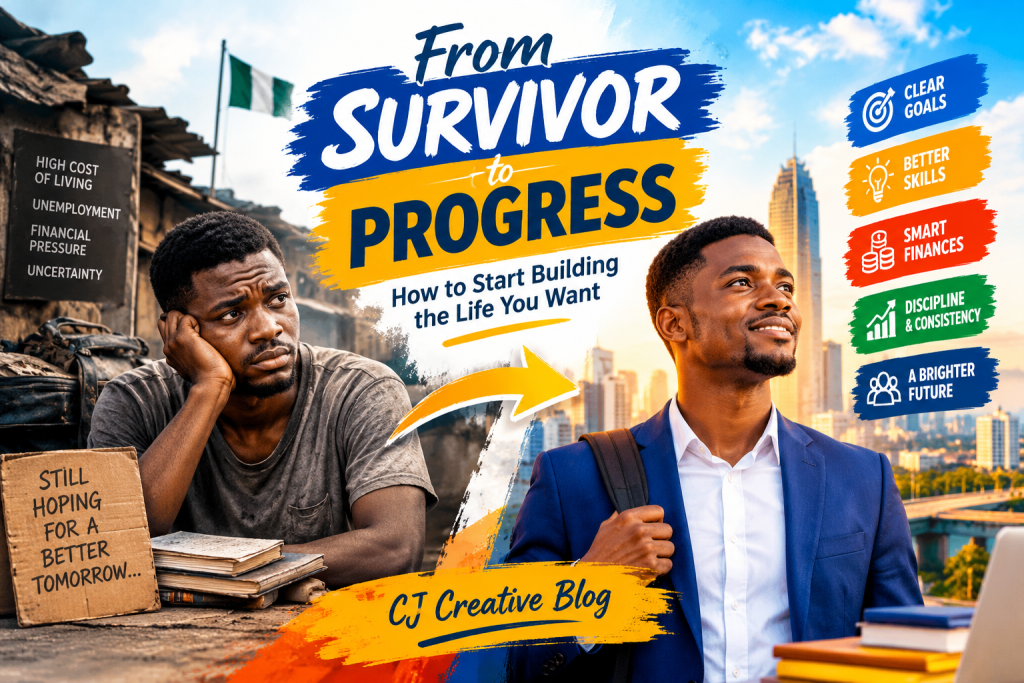
How to Start Building the Life You Want
Life in Nigeria can be challenging. Between rising living costs, limited job opportunities, financial responsibilities, and the pressure to succeed, many people spend most of their time trying to survive. You wake up, go to work, search for opportunities, handle responsibilities, and hope tomorrow will be better.
But have you ever stopped to ask yourself: Am I only trying to get through life, or am I taking steps towards building the life I truly want?
There is a difference between surviving and making progress. Survival is about meeting today's needs. Progress is about taking practical steps that can improve your future.
You may not have everything figured out today. You may not have the money, connections, or opportunities you wish you had. However, you can begin where you are, use what you have, and gradually work towards a better life.
Here are practical principles that can help you move from survival to progress.
1. Be Clear About the Life You Want
It is difficult to make progress when you do not know what you are working towards.
Many people want to be successful, financially stable, respected, or independent. These are understandable desires, but they are broad goals. You need to define what they mean for you personally.
For example, does a better life mean learning a skill that can help you earn more? Starting a small business? Finding a better job? Supporting your family without constantly struggling? Or having enough savings to handle emergencies?
Take time to write down what you want your life to look like over the next one to three years.You do not need to have every detail figured out. You simply need a direction.
When your destination becomes clearer, it becomes easier to identify the steps that can take you there.
2. Change How You Think About Your Situation
Your circumstances matter. Financial difficulties, unemployment, and limited opportunities are real challenges, and positive thinking alone will not make them disappear.
However, how you respond to those challenges can influence the choices you make.
Instead of repeatedly telling yourself, “Nothing can work for me,” ask, “What can I learn, change, or try with the resources available to me?”
This does not mean pretending everything is fine. It means acknowledging your reality without allowing it to define every possibility for your future.
You might not be able to change your entire situation today, but you may be able to improve one part of it.
Start there.
3. Build Skills That Solve Real Problems
One practical way to improve your opportunities is to develop skills that people and businesses need.
Think about skills such as content writing, graphic design, video editing, digital marketing, sales, website development, bookkeeping, or a useful trade. The right choice depends on your interests, available resources, local opportunities, and the needs of potential customers or employers.
Do not choose a skill simply because someone online claims it will make you rich. Research it. Understand who needs it, how people earn from it, and what it takes to become competent.
Then practice consistently.
For example, if you want to become a graphic designer, you can begin by learning design principles, practicing with available tools, and creating sample projects. As your ability improves, build a portfolio and look for opportunities to work with real clients.Remember, learning a skill does not guarantee immediate income. You will still need practice, patience, and the ability to communicate your value. But developing a useful skill can give you more options to pursue.
4. Start Small Instead of Waiting for Everything to Be Perfect
One reason people delay progress is that they believe they need significant money, expensive equipment, or perfect conditions before they can begin.
Sometimes, resources really are a barrier. But in other situations, you can take a small first step while preparing for the bigger one.If you want to start a business, research your potential customers before spending heavily. Find out what people need, what they are willing to pay for, and whether you can deliver the product or service reliably.
If you want to become a content creator, begin by practicing and publishing useful content with the tools you already have.
If you want a better job, improve your CV, build relevant skills, and apply for suitable openings.
Start with a manageable step, learn from the result, and improve as you go.
Small beginnings are not a reason to feel ashamed. They can be a practical way to test an idea, develop experience, and reduce unnecessary risks.5. Learn to Manage the Money You Have
Earning money is important, but managing it also matters.
When your income is limited and responsibilities are many, budgeting can feel difficult. Sometimes, essential expenses already consume everything you earn. In such circumstances, budgeting cannot magically create money that is not there.
However, understanding where your money goes can help you make informed decisions.
Start by recording your income and expenses. Separate essential needs from non-essential spending where possible. Identify recurring costs, avoid unnecessary debt when you can, and consider saving a small amount when your circumstances allow.
If your income is irregular, planning around your most important expenses may help you prepare for leaner periods.
Do not measure your progress only by how much money you earn. Also pay attention to how well you understand your finances, the decisions you make, and whether you are gradually improving your financial stability.
6. Develop Discipline and Consistency
Motivation can help you begin, but it may not always be there when you need it.
Some days, you will feel excited about your goals. On other days, you may feel tired, discouraged, or distracted by immediate problems. This is where discipline and realistic routines become useful.
You do not need to spend every waking hour working. Instead, identify a few actions that matter and create a routine you can maintain.
For example, you could dedicate 30 minutes each day to learning a skill, spend time each week applying for opportunities, or review your finances every Sunday.
The goal is not to become perfect overnight. It is to make useful actions part of your life.
Progress often comes from repeating small, meaningful actions long enough for them to produce results.
7. Learn From People Who Have Built Something Valuable
You can learn from people who have developed successful businesses, careers, or creative projects. Their experiences may help you understand how they approached problems, served customers, managed resources, or responded to setbacks.
Consider studying entrepreneurs such as Aliko Dangote, not simply because he is wealthy, but to understand the importance of identifying market needs, building operations, developing relationships, and thinking long term.
However, remember that every person's journey is different. No successful person's story provides a guaranteed formula for your own life. Access to capital, timing, education, family responsibilities, and economic conditions can all influence outcomes.
Take useful lessons from others, adapt them to your circumstances, and focus on building your own path rather than comparing your progress with somebody else's achievements.
8. Be Intentional About Your Next Opportunity
As you gain skills and experience, think about how you can use them to create value.
Can you help a small business improve its online presence? Can you offer a service that saves people time? Can you teach something you understand well? Can you use your experience to solve a problem in your community?
Opportunities often begin with understanding what people need and finding a reliable way to meet that need.
You may eventually decide to pursue a second source of income, start a business, or develop a new career. Before committing your limited resources, consider the time, cost, risks, and likely demand.
Avoid spreading yourself across too many ideas at once. Choose a realistic starting point, build competence, and assess your results before expanding.
The objective is not simply to stay busy. It is to make your effort useful and sustainable.
9. Protect the Progress You Make
Building a better life is not only about moving forward. It is also about protecting what you have worked to achieve.
Be cautious about offers promising guaranteed returns, quick wealth, or unusually high profits with little effort. Verify opportunities before sending money or sharing sensitive information.
Be careful with borrowing, especially when repayment depends on income you are not sure you will earn. Where possible, build an emergency reserve gradually and seek reliable financial guidance before making major financial decisions.
Also protect your time, energy, relationships, and well-being. Rest is important, and asking for help when you need it is not a weakness.
A meaningful life should not be measured by income alone. Your health, peace of mind, relationships, personal growth, and ability to contribute to others matter too.
10. Take One Practical Step This Week
You do not need to transform your entire life in seven days. You need to begin making deliberate decisions.Here is a simple seven-day challenge:
Day 1: Write down three things you want to improve in your life.
Day 2: Choose one goal to focus on first.
Day 3: Research a skill, opportunity, or practical step connected to that goal.
Day 4: Spend at least 30 minutes learning or practicing.
Day 5: Identify one problem you could solve for someone else.
Day 6: Review your spending, time, or daily habits and identify one area to improve.
Day 7: Review what you have done and plan your next week.
Adapt the challenge to your circumstances. If you are dealing with urgent financial needs or other responsibilities, begin with the step that is most realistic and useful to you.
At the end of the week, you may not have a new job, a thriving business, or a large savings balance. That is not the point.
The point is to stop postponing every meaningful action until life becomes easier.
Final Thoughts: Your Future Needs a Plan
Moving from survival to progress does not mean pretending that life is easy. It means recognizing the challenges you face while looking for realistic ways to improve your situation.
You need a direction, a willingness to learn, useful skills, thoughtful financial decisions, discipline, and the patience to keep improving. You will also need to adjust when circumstances change and recognise that some challenges cannot be overcome through individual effort alone.There may be setbacks. Some plans will need to change. Certain opportunities may not work out. That does not mean every effort has been wasted. Experience can help you make better decisions the next time.Start with what you can influence today. Learn what you need to learn. Build what you can build. Ask for help when necessary and give yourself room to grow.
You may not control every circumstance you face, but you can begin making more intentional decisions about the direction of your life.
Want to Understand the Principles of Prosperity More Deeply?
If you want to explore these ideas in greater detail, read The Blueprint of Prosperity by Chukwu Joshua, published by CJ Creative Blog.
The book explores faith, clear thinking, useful work, personal discipline, financial awareness, and the habits that can help you build a more meaningful life. It is designed to help you think more intentionally about prosperity and turn useful principles into practical action.
Read the book here: THE BLUEPRINT OF PROSPERITY
Published by CJ Creative Blog — Making information accessible to everyone.
Suggested URL slug: from-survival-to-progress
Meta description: Discover practical ways to move from survival to progress in Nigeria by setting clear goals, building useful skills, managing money, and developing better habits.
Excerpt: Life in Nigeria can make it difficult to think beyond daily survival. Discover practical steps to build useful skills, manage your finances, stay disciplined, and start working towards the life you want.